
TATARTIST Furniture Chair
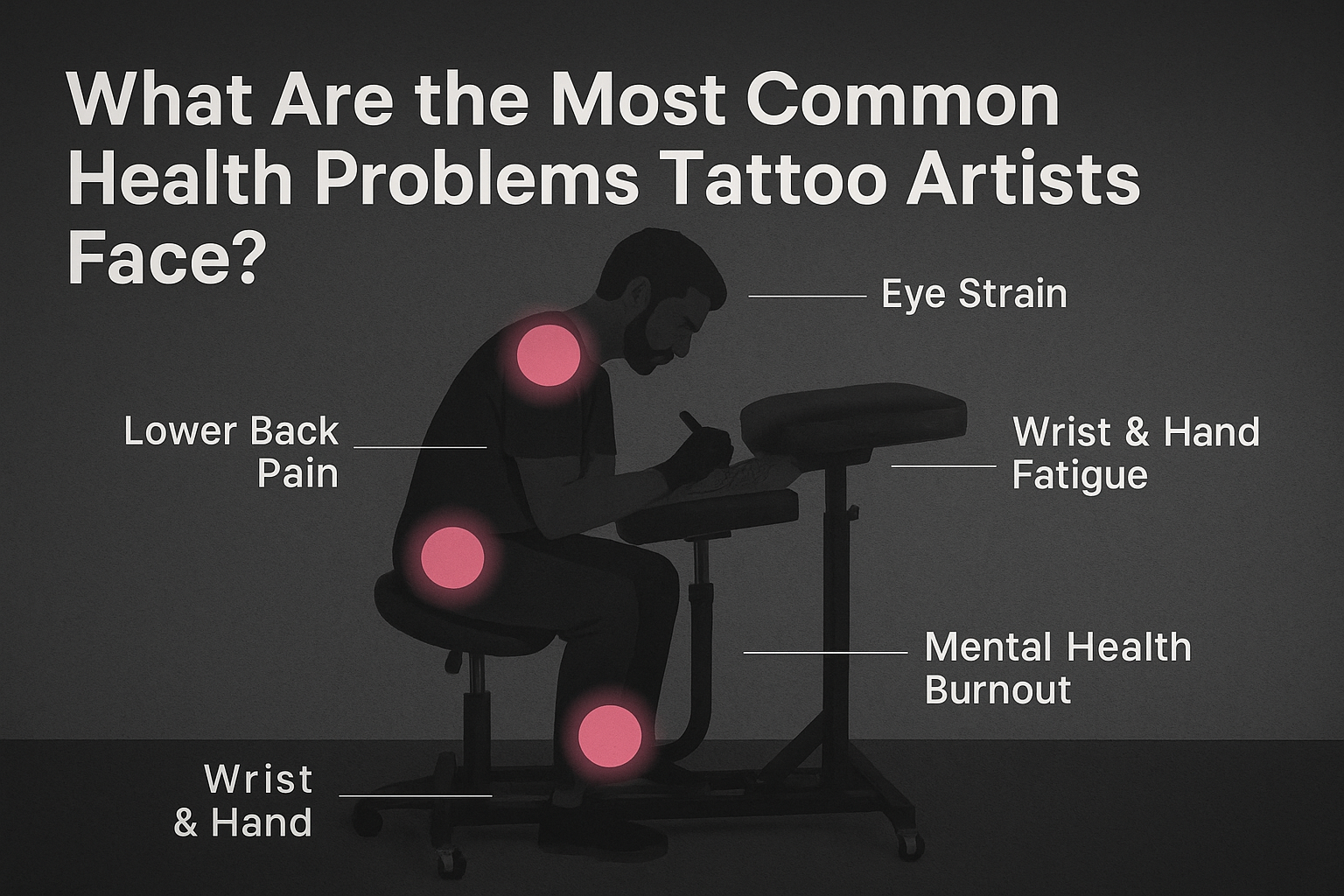
Working as a tattoo artist is often glorified for its creativity and lifestyle — but what many don’t see are the physical and mental strains that come with the job. While you’re focusing on perfect lines and detailed shading, your body might be taking a silent beating.
In this blog, we’re diving into the most common health problems tattoo artists face, why they occur, and what you can actually do about them — with practical tools, checklists, and real-world solutions from inside the studio.
1. Chronic Back and Neck Pain
The Problem:
Tattoo artists spend long hours hunched over clients — whether they’re tattooing arms, legs, or backs. This often leads to poor posture, neck strain, and chronic lower back pain.
Why It Happens:
-
Prolonged forward-leaning positions
-
Poor stool or table height setup
-
Lack of movement breaks
Solution Highlights:
-
Invest in ergonomic chairs like saddle stools (e.g., TATARTIST ArmStool™)
-
Adjustable armrests reduce the need to hunch
-
Practice microstretching every hour
2. Wrist and Hand Fatigue (RSI)
The Problem:
Repetitive motions using a tattoo machine can strain the wrist, hand, and fingers — sometimes progressing to Repetitive Strain Injuries (RSI) or even Carpal Tunnel Syndrome.
Why It Happens:
-
Holding machines for hours
-
Poor hand positioning without support
-
Vibration exposure over time
Solution Highlights:
-
Use lighter-weight machines
-
Switch grip frequently
-
Support client limbs on stable armrests — not your own hand!
3. Eye Strain and Vision Problems
The Problem:
Focusing on tiny details, especially in poor lighting, can cause eye strain, blurred vision, and even long-term deterioration.
Why It Happens:
-
Inadequate lighting
-
Long focus on intricate designs
-
Dry eyes from lack of blinking
Solution Highlights:
-
Invest in ring lights or magnifying lamps
-
Use anti-reflective glasses
-
Follow the 20-20-20 rule: every 20 mins, look 20 feet away for 20 seconds
4. Respiratory Issues and Skin Sensitivities
The Problem:
Tattoo artists are regularly exposed to airborne particles — from stencil sprays, cleaning chemicals, ink pigments, and skin debris — which can lead to respiratory issues or skin allergies.
Why It Happens:
-
Poor ventilation
-
Inconsistent PPE usage
-
Overexposure to solvents or aerosols
Solution Highlights:
-
Use air purifiers with HEPA filters
-
Wear gloves and masks
-
Choose skin-safe, hypoallergenic products whenever possible
5. Mental Health Burnout
The Problem:
Tattooing isn’t just physically demanding — it can be emotionally exhausting too. Managing clients, perfectionism, inconsistent income, and long hours can result in anxiety, depression, or burnout.
Why It Happens:
-
Pressure to be perfect
-
Client confrontation
-
Irregular work-life balance
Solution Highlights:
-
Set boundaries with booking & breaks
-
Stay connected with artist communities
-
Take mental breaks without guilt — recovery is part of longevity
Health Checklist for Tattoo Artists
Here’s a simple self-check guide you can review weekly:
✔ Posture feels upright and supported during work
✔ No consistent tingling or numbness in wrist/fingers
✔ Eyes don’t feel dry or blurry after sessions
✔ No lingering skin irritation after using products
✔ Getting at least 1–2 days off per week
✔ Stretching or standing every hour
✔ Regular client setup includes armrest or support
✔ Workspace is well-ventilated and lit
Why Tools Like the TATARTIST ArmStool™ Can Help
Imagine a setup that actually works with your body, not against it. The new TATARTIST ArmStool™ is a two-in-one ergonomic solution: a saddle-style artist stool paired with an oversized adjustable armrest, all in one clean structure.
✅ Relieves lower back strain with proper seating posture
✅ Supports client limbs at the ideal angle and height
✅ Rollers or static mode — your choice for every session
✅ Compact design ideal for tight studios or mobile artists
Whether you're tattooing a forearm or a full back, your body deserves as much attention as your art.
🖤 Learn more and get notified when it drops: tatartist.com
Illustrative Visuals
📸 Suggested Image Ideas for the Blog:
-
Header Image: The TATARTIST ArmStool™ centered against a gray tattoo studio wall with flash art.
-
Posture Comparison Infographic: Hunched-over artist vs upright saddle seated artist using an armrest.
-
Workspace Setup: Top-down layout of a healthy tattooing environment including light, stool, and arm support.
-
Stretch Routine Image Set: 3–4 simple chair-side stretches artists can do between clients.
Frequently Asked Questions (FAQ)
Q1: How can I reduce wrist pain from tattooing?
A: Alternate your grip, take breaks between clients, and use armrests to avoid over-compensation by your hand and wrist.
Q2: Is burnout common in the tattoo industry?
A: Yes. Burnout can affect even experienced artists due to emotional labor, long hours, and perfectionism. Building in rest and connecting with peers helps.
Q3: Are ergonomic tools worth the investment?
A: Absolutely. Just as you wouldn’t compromise on your tattoo machine, don’t compromise on your physical health. Products like ArmStool™ are built to support longevity in the craft.
Q4: I have limited space in my studio — is the ArmStool™ bulky?
A: No, it’s designed to be compact yet powerful. The combined design minimizes clutter while offering dual functionality.
Q5: Is the ArmStool™ already available?
A: It’s launching soon. Visit tatartist.com to sign up and be the first to know when it’s available.
Final Thoughts
Tattooing is a demanding art that pushes the limits of body and mind. But with the right tools, awareness, and habits, you don’t have to choose between passion and physical well-being. Start by adjusting your setup — your spine, wrists, and sanity will thank you.
🔗 Subscribe to updates on the ArmStool™ and future drops from TATARTIST.