
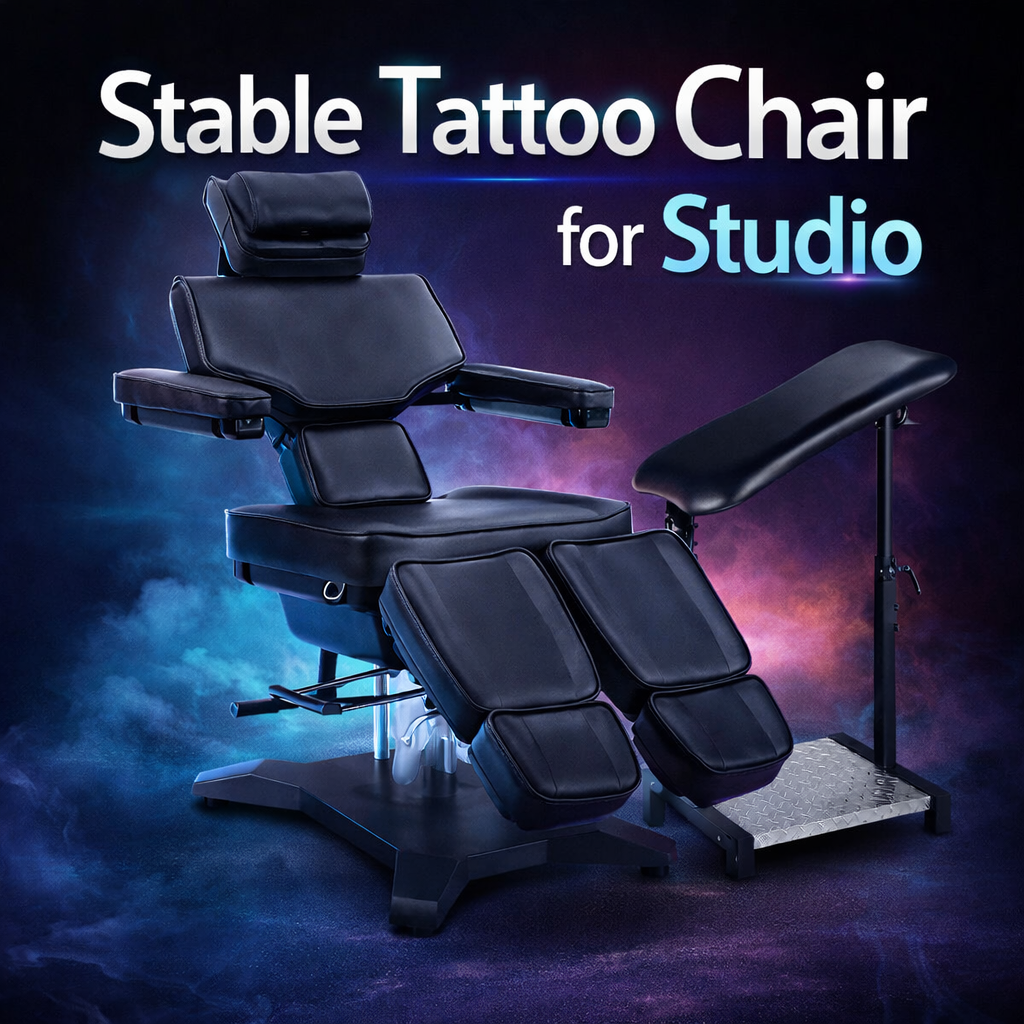
Cheap Tattoo Chairs Are Expensive When Your Client Falls Off
A tattoo artist’s perspective on stability, safety, and why your client chair should never be the thing you worry about.
I used to think a chair was just a chair.
As long as it could recline, lift, and hold a client — it was “good enough.” I’d rather spend money on machines, lights, or studio décor first.
Until the day my chair shifted under a client mid-session.
It didn’t collapse. It didn’t break. It just… moved.
That half-inch shift was enough to make me stop my needle.

Cheap tattoo chairs aren’t cheap. You just don’t pay the price on day one.
The Real Fear Isn’t Fatigue — It’s Uncertainty
Long sessions don’t scare experienced artists. We’re used to 4-hour, 6-hour, even full-day work.
What drains you isn’t time — it’s instability.
When your chair isn’t fully grounded, you’re constantly running background checks:
- Is the client leaning too far?
- Is the weight shifting to one side?
- If they adjust suddenly, will the base hold?
You don’t notice how much mental energy that consumes — until you sit behind a chair that doesn’t move at all. Stability removes hesitation. And hesitation is the enemy of clean lines.
One “Almost Accident” Costs More Than a Premium Chair
Most chairs don’t fail dramatically. They wobble. They rebound. They tilt when weight shifts. That’s where risk lives.
Think about what happens if a client nearly falls:
- Session stops immediately
- Client tension skyrockets
- Your rhythm is gone
- Trust is shaken
- Worst case: reviews, complaints, refunds
Even if nobody gets hurt, the psychological damage is done. After that, you start avoiding heavier clients, certain body positions, or long endurance sessions.
That’s lost income — not just inconvenience.
What Actually Makes a Tattoo Chair “Expensive”
It’s not upholstery. It’s not aesthetics. It’s one thing: whether it can guarantee your client will never flip, tip, or slide.
That’s why chairs built on heavy, low-center bases exist. A chair like the TATARTIST TA-TC-604 is designed around stability first — so when a client leans, twists, or repositions, the chair stays grounded.
Stability in Practice: Where It Actually Changes Your Work
A chair proves itself in motion, not in specs. Here’s where stability meets daily tattoo reality.
1) Leg & Lower Body Work — Where Chairs Fail Fast
Leg tattoos demand positioning freedom. Without split-leg adjustability, you end up bending awkwardly, asking clients to hold uncomfortable angles, and fighting gravity instead of working with it.
When legs are supported (not suspended), involuntary movement drops — and your line quality stays consistent.
2) Back & Forward Lean Sessions — Endurance Territory
Upper back and spine work often requires forward lean positioning. If support angles aren’t right, clients compensate with muscle tension. That tension shows up as micro-movement, and you feel it immediately.
Proper support means: clients last longer, artists work steadier, sessions run smoother.
3) Small Workspaces — Where Rotation Matters More Than Size
In tight studios, repositioning the chair becomes fri